How to Clean Every Type of Shoe — Leather, Suede, Mesh, Canvas, Knit
There is no one way to clean a shoe, because there is no one shoe: leather gives up its oils to water, suede nap traps whatever touches it, and canvas barely cares. Identify the material, then start with the gentlest method that could possibly work.
PUBLISHED 2026-08 · REVISED —
At a glance
- Identify the material first — the safe method depends on it, and the wrong one is permanent.
- Lowest intervention wins: dry brush before damp cloth, damp cloth before any solution, solution before any wash.
- The washing machine is for canvas and mesh only — cold, gentle, laces out, in a mesh bag. Never leather, never suede, never the dryer.
- Winter salt is the one stain that punishes waiting: wipe it the same day with one part white vinegar to two parts water.
- Dry every shoe at room temperature, away from radiators, fires, and hair dryers.
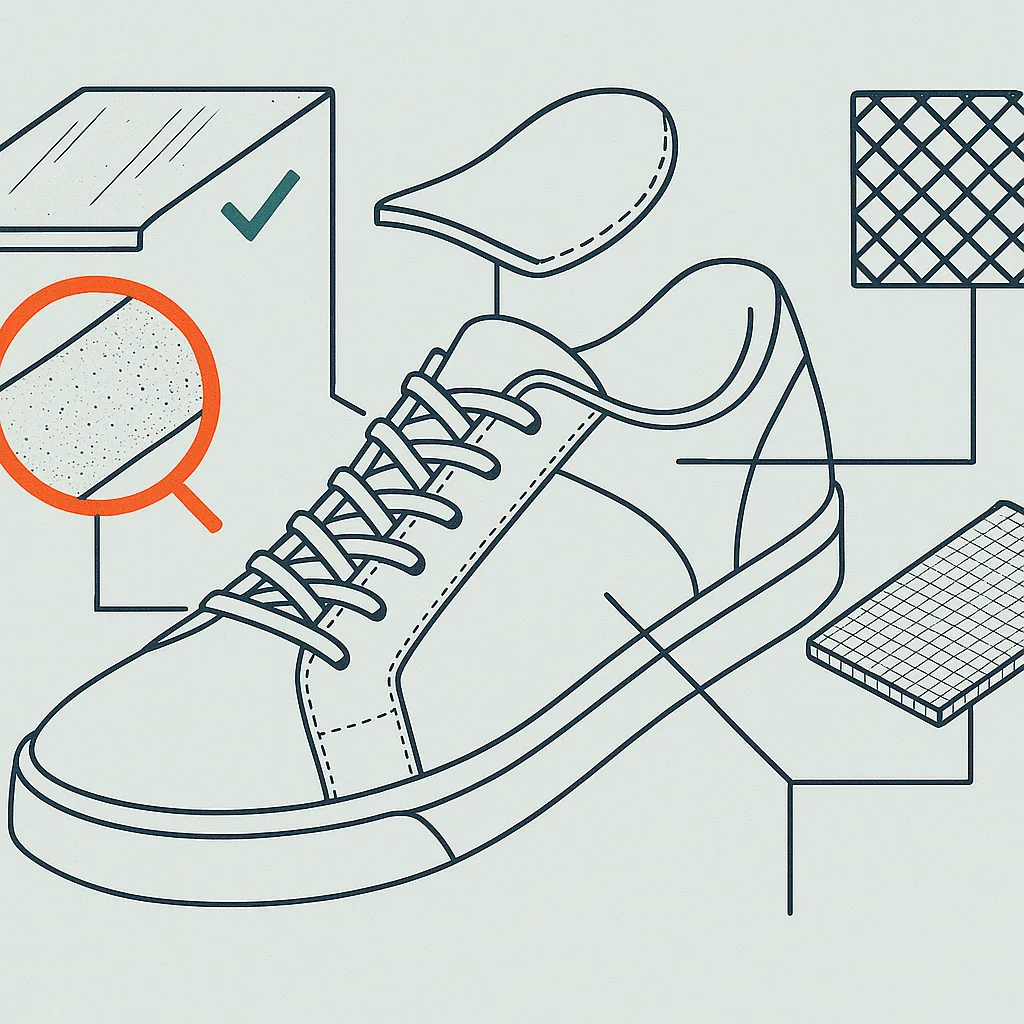
Most ruined shoes are not ruined by dirt. They are ruined by cleaning: the suede trainers that met a wet sponge, the leather boots that dried on a radiator, the knit runners that went through a hot wash and came out a size smaller in spirit. Dirt sits on the surface and mostly waits. The wrong cleaning method changes the material itself, and material damage does not wipe off.
So this guide runs on two rules. First, identify the material before touching anything, because the chemistry genuinely differs — what restores one upper destroys another. Second, always start with the lowest intervention that could work and escalate only if it fails. A dry brush risks nothing. A damp cloth risks very little. A bucket of soapy water risks a great deal, and a washing machine risks everything. Panic is what moves people straight to the bucket.
01Why the material decides the method
A shoe upper is one of a handful of things. Leather is preserved animal hide — a mat of protein fibres kept flexible by the oils and waxes the tannery put into it. Water is not leather's enemy exactly, but water moving out of leather is: as it evaporates, especially with heat, it carries those oils with it, and the fibres it leaves behind go stiff and, eventually, crack. Suede and nubuck are leather buffed into a raised nap — suede on the hide's flesh side, nubuck on the tougher grain side — thousands of exposed fibre ends that trap particles and, once wetted unevenly, dry into visible rings. Canvas is woven cotton: robust, dyeable, and largely indifferent to water. Mesh and knit uppers are engineered polyester — strong in normal use but delicate under machine agitation, and quick to lose their shape if cooked.
That is the entire logic of everything below. Water-based cleaning is safest on canvas, conditional on leather, and a last resort on suede. Heat is bad for all of them, for different reasons: it strips leather's oils, sets stains into cotton, and softens the glue holding every modern sole on. Which is why the drying instruction at the end of this page never changes, whatever the material: room temperature, moving air at most, and patience.
02Leather
The routine clean
Wipe with a dry or barely damp cloth, then buff. That is genuinely the whole routine, and doing it often is worth more than doing anything dramatic rarely. A horsehair brush — cheap, and it lasts decades — lifts dried dirt from seams and welt edges better than any cloth.
For actual grime — scuff marks, dried mud, a season of pavement film — Clarks, a shoemaker with two centuries of reasons to know, recommends a solution of two parts water to one part white vinegar, applied with a soft cloth, followed by natural air-drying. Wipe gently; the point is to dissolve the film, not to scrub the finish.
Then condition. This is the step people skip, and it is not optional after a wet or vinegar clean, because anything that lifts dirt from leather lifts some of its oils too. A neutral leather conditioner or cream, applied sparingly with a cloth, put back what the cleaning took out. Sparingly is the operative word: Horween — the Chicago tannery whose leather ends up on some of the most expensive shoes made — suggests a light haze of conditioner on its shell cordovan roughly every ten to fifteen wearings, not every week. More product is not more protection.
Water spots and small marks
Here is the anti-panic principle, straight from the tannery: most marks on leather are temporary. Horween's own care guidance says rain spots fade with regular wear and brushing, and that finished leather tends to improve with use, not deteriorate. If a water spot annoys you faster than wear will fix it, the tannery's trick is counterintuitive but sound — re-wet the whole panel evenly with a damp cloth so it dries as one surface instead of as a ring, then let it dry slowly and brush. The drying rule matters more than the wetting: away from heat and away from moving air.
Soaked through
Caught in real rain? Stuff the shoes with plain paper or put them on shoe trees so they keep their shape, stand them somewhere room-temperature, and leave them a full day or two. Do not hurry them. A radiator will pull the water out in an hour and take the leather's suppleness with it. When they are fully dry, brush, then condition — a soaking is exactly the event conditioning exists for.
The patent edge case
Patent leather is the easy one, because you are not cleaning leather at all — you are cleaning the glossy coating sealed over it. A damp cloth and a dry buff handle nearly everything. Do not use suede brushes, stiff bristles, or solvent cleaners on it: the coating scratches, and a scratched coating cannot be conditioned back.
03Suede and nubuck
Suede's rule is the inverse of every instinct: dry methods first, water almost never. The nap that makes suede feel expensive is also why it stains — liquid wicks between the raised fibres and dries unevenly, leaving rings that are effectively permanent. Clarks' own suede guide leads with prevention for exactly this reason — keep suede away from wet weather — which is why suede shoes and rainy forecasts should not meet.
The routine clean is a suede brush, used with the grain — the direction the nap naturally lies. Brushing lifts dust and revives the crushed pile in one motion. For scuffs and dry marks, the next rung up is a suede eraser (a plain white artist's eraser works similarly): rub the mark gently, then brush the crumbs away and restore the nap direction.
Only when dry methods have failed does liquid enter the picture, and then in the smallest possible quantity: a purpose-made suede foaming cleaner worked in with the grain, or — for stubborn marks — a soft cloth barely dampened with diluted white vinegar, applied to the mark alone. The mistake is quantity. Flooding the area to "rinse it properly" is how one small stain becomes one large ring. If the nap dries flattened, a brief pass of steam from a kettle held well away, followed by brushing, lifts it again.
Red flag Any product or tip that involves soaking, machine-washing, or scrubbing suede with soap and water. There is no version of wet cleaning that suede reliably survives; when a suede shoe is badly stained, the honest options are a specialist cleaner or acceptance.
04Canvas
Canvas is where you can finally relax. Woven cotton tolerates water, mild detergent, and honest scrubbing. The routine clean is a dry brush and a wipe; the stain method is a paste — Clarks suggests one tablespoon of bicarbonate of soda, two tablespoons of white vinegar, and a cup of warm water — worked into the marks with an old toothbrush, then wiped and air-dried. Plain mild soap and water does nearly as well. Two cautions survive even here: skip bleach on coloured canvas unless you want pale patches, and air-dry out of direct sun, which fades dye and yellows white rubber.
05Mesh and knit
Mesh and knit trainers look machine-friendly and are not — the fabric is tough but the structure is delicate. Nike's guidance for its own Flyknit and mesh shoes is hand washing, and the method is unglamorous kitchen-sink work: mix a small amount of mild soap or laundry detergent into cool or lukewarm water (hot water can shift the dye), brush off loose dirt, take the laces out, work the solution over the upper with a soft brush, scrub the soles properly, wipe the soap off, pat dry with a cloth, and let them air-dry. No bleach, no harsh solvents — knit uppers are dyed engineered polyester, and aggressive chemistry attacks the colour before it attacks the dirt.
The soft brush matters more than the soap. Knit snags: a stiff brush or a fingernail-and-fury approach pulls loops out of the weave, and a pulled loop is forever. Light circular passes, repeated, beat hard scrubbing once.
06The washing-machine question
Asked constantly, so answered flat: canvas and mesh, yes, with precautions; everything else, no.
The claim
“Fully machine washable — just throw them in with the towels.”
The fact
Nike's own washer guide does not recommend machine-washing even its own trainers — hand washing is the stated best method, and the machine is not offered as an option at all (Nike).
If a pair of canvas or mesh shoes is filthy enough that the machine is worth the risk, stack the precautions: laces and insoles out (wash the laces in the same load; let the insoles air out separately), shoes in a mesh laundry bag so they tumble as a unit rather than hammering the drum, cold water, gentle cycle, mild detergent. Then air-dry — the machine's job ends at the rinse.
Never machine-wash leather, suede, nubuck, or patent: agitation plus water plus detergent is precisely the combination Sections 02 and 03 exist to prevent, applied for forty minutes at once. Cushioned midsoles argue the same caution whatever the upper: foam, gel, and air units take structural punishment in the drum that the fabric might survive — and Nike's guide adds that a drum full of tumbling shoes can damage the washing machine itself.
And the tumble dryer is off the table for every shoe ever made. Heat softens the adhesives that hold modern soles on, warps foam midsoles, shrinks leather, and sets stains. There is no exception, no low setting, no "just ten minutes".
07Winter salt stains
Salt is the exception to the anti-panic register, because it is the one common stain that gets worse the longer it sits. The white tide lines on winter boots are road salt crystallising as the leather dries, and salt left in the fibres draws moisture out of them and keeps chemically working; House Digest's guide puts it plainly — wait too long and the salt permanently burns the leather and changes its texture. Same-day removal is the whole game.
On smooth leather: one part white vinegar to two parts water, a barely damp microfibre cloth, and gentle wipes along the salt line until it lifts. The vinegar solution dissolves and helps neutralise the salt residue rather than just smearing it — that is why vinegar and not soap. Air-dry at room temperature, and specifically not by a radiator or fire: direct heat makes the already salt-stressed fibres shrink and snap. Once dry, condition, because vinegar and salt have both been pulling oils out.
On suede, the ladder from Section 03 applies even to salt: suede eraser and brush first, and only for a stubborn line a soft cloth with the smallest amount of the same vinegar solution, touched onto the mark rather than wiped across the panel. On rubber winter boots, relax entirely — warm water, dish soap, a sponge, done.
08White soles, laces, and insoles
The white rubber around the sole — the foxing on trainers — is tougher than anything above it, so it can take the strongest method on the shoe: the bicarbonate-and-vinegar paste and a toothbrush, or a melamine sponge, which works as ultra-fine abrasion and should therefore never wander up onto leather or knit. Yellowed rubber, for honesty's sake, is oxidation rather than dirt, and scrubbing will not reverse it.
Laces: take them off and wash them — by hand in soapy water or bagged in the machine, per Nike. Replacements cost little, and fresh laces do a disproportionate amount of the "these look new" work.
Insoles: out of the shoe after any soaking and after every wash, and aired regularly in between. Odour lives in the insole's foam, not the upper — a light dust of bicarbonate of soda overnight, tapped out in the morning, deals with most of it. An insole that stays flattened when you press it has stopped doing its job; that is a replacement question, covered in the guide to choosing shoes.
09Drying and storage — where shoes are actually ruined
Every section above ends the same way on purpose. Air-dry at room temperature, shoes stuffed with plain paper or on shoe trees to hold their shape, away from radiators, fires, hair dryers, tumble dryers, and strong sun. Horween's drying guidance adds a detail most people miss: away from moving air, too — a fan pointed at wet leather dries the surface faster than the core and stresses it the same way heat does. A day or two of patience is the cheapest shoe-care product there is.
Storage is the same principle stretched over months. Somewhere dry and ventilated, not a sealed plastic box (trapped moisture moulds leather and mildews canvas), shapes held with trees or paper, suede brushed before it goes away, leather conditioned so it does not sit out a season drying. The habit that does the most quiet good is rotation: a day's rest lets the sweat a shoe absorbs — a surprising amount of it — evaporate before the next wear, which is better for the material than any product. The same finish-first logic governs cleaning a leather handbag, where identifying the surface before choosing the method matters even more.
None of this requires a cabinet of products: a horsehair brush, a suede brush and eraser, white vinegar, bicarbonate of soda, mild soap, a neutral conditioner. Most of the method on this page comes from the people with the least incentive to be wrong about it — tanneries and shoemakers writing about their own materials — supplemented where noted by home-care guides, which is the source hierarchy described in how we work.
The triage table, for the moment of panic:
| Material | Routine | Stain | Machine? |
|---|---|---|---|
| Leather | Dry cloth, brush | 2:1 water–vinegar wipe, then condition | NO |
| Patent | Damp cloth, buff | Damp cloth; no brushes or solvents | NO |
| Suede / nubuck | Suede brush, with the grain | Eraser first; minimal vinegar last | NEVER |
| Canvas | Dry brush, wipe | Bicarbonate–vinegar paste, toothbrush | YES — cold, bagged |
| Mesh / knit | Soft brush, mild soap, cool water | Same, repeated gently | HAND WASH |
| Any shoe, dryer | — | — | NEVER |
The checklist
- Name the material before you touch the shoe — leather, patent, suede, canvas, or mesh — and if one shoe mixes materials, treat each panel by its own rule.
- Start dry: brush and cloth first, and stop the moment the shoe looks clean.
- Escalate one rung at a time — damp cloth, then the material's solution, then (canvas and mesh only) a wash.
- Machine-wash only canvas or mesh: laces and insoles out, mesh bag, cold water, gentle cycle.
- Wipe winter salt the same day: one part white vinegar to two parts water on leather; eraser first on suede.
- Condition leather after every wet or vinegar clean — sparingly.
- Dry every shoe at room temperature, stuffed or on trees, away from heat, sun, and fans; give it a full day.
- Store dry and ventilated, never sealed in plastic; rotate pairs so each gets a rest day.
Sources